
Tennis Court Resurfacing – how and why
If your tennis court sees a lot of game play and is showing signs of wear and tear, chances are it’s due for a bit of love and care with tennis court resurfacing.
At Ultra Courts we know tennis court resurfacing isn’t just about improving the appearance of your Melbourne court, it also plays an important role in keeping the space functional, safe and usable for years to come.
Tennis court resurfacing is essential for maintaining a safe and long-lasting playing space, but also to keep it as both a competitive and fun environment. Whether it’s for a Melbourne backyard court, local club or a school, regular maintenance and resurfacing is the best way to protect your court and players. Let’s hit the court and find out how it all happens why you should get it done.
.
The ins and outs of tennis court resurfacing
From foot traffic to tennis ball bounce, sun exposure and of course the dreaded Melbourne rain, tennis courts certainly take a lot of punishment over their lifetime. Cracks, fading, puddling and uneven surfaces not only make the game less enjoyable, but can also pose safety risks. That’s where tennis court resurfacing comes in, a process that revitalises a worn out court and restores it to a playable, professional standard.
Resurfacing isn’t just about making the court look good again. As courts age, they can develop cracks and depressions due to ground movement, the impact from water or even natural deterioration of the base materials. These issues affect the bounce of the ball, overall court safety and can lead to further damage if left untreated. A newly resurfaced court not only looks amazing but provides better traction, improved drainage and of course gives you a better bounce, getting you back on track for that perfect ace.
How resurfacing happens
While we wish it was as easy as waving a wand and the job is done, tennis court resurfacing involves a number of steps.
- One of the first steps is to clean and then inspect the court to uncover and identify the areas of concern.
- Any identified cracks, uneven areas and other imperfections are levelled, patched or filled in where necessary.
- The court space will then be checked to ensure it’s level and allows for correct drainage.
- Next up we prepare the surface, applying an acrylic resurface base coat.
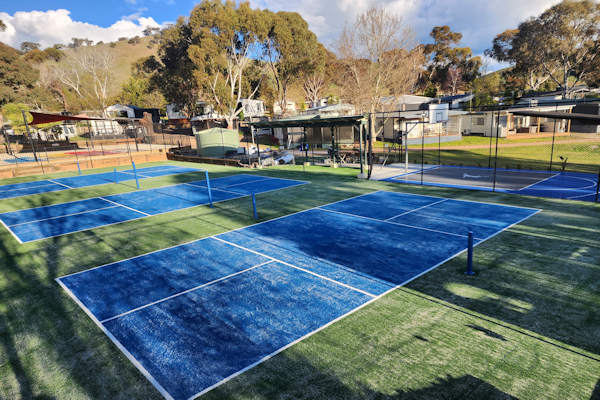
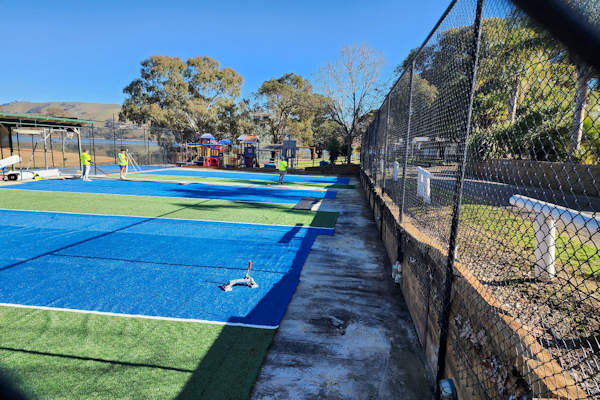
- Then it’s time for the colours, topped off with line marking. High-quality, UV-resistant acrylic colour coatings are applied, usually in two or more layers. These coatings give the court its distinctive colour and texture.
- Once all layers are applied, the court needs time to fully cure, before it’s ready for play.
How often does a court need to be resurfaced?
It varies depending on the type of court surface and also the usage, climate and maintenance. On average, a hard court is every 4-8 years, synthetic courts 12-20 years and clay courts every 2-3 years.
If it’s time to resurface your tennis court, call the team at Ultra Courts to see how we can help.