
Synthetic Grass vs. Hard Court: Which Surface is Best for Your Melbourne Property?
Whether you’re an ace at the game or a rookie with the racquet, choosing between synthetic grass vs hard court for your playing surface that depends on multiple factors.
The choice between synthetic grass vs hard court for your Melbourne property is a major decision that comes down to how you want the court to play, how much maintenance is involved and how comfortable it is to use throughout the year.
The team at Ultra Courts is here to help you negotiate the battle of synthetic grass vs hard court. We know that understanding the pros and cons will help you decide on the best option for your space, lifestyle and budget, creating a court for you to get the most out of your game.
A surface for comfort
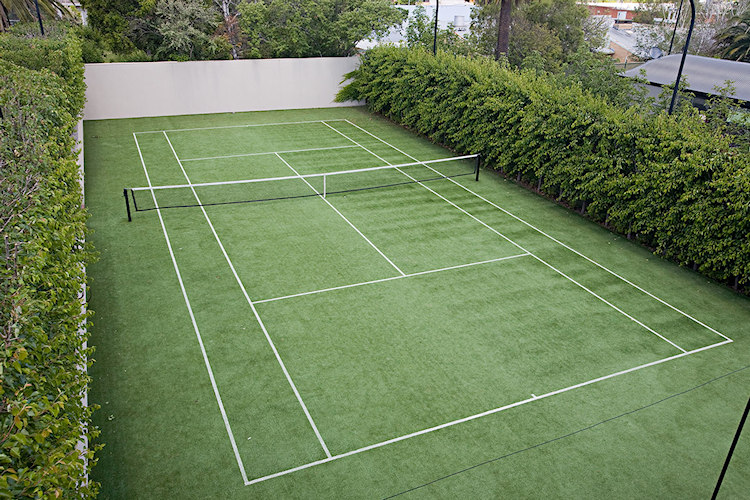
Synthetic grass has proven to be a popular choice for residential courts as it has a softer, more forgiving surface. Synthetic turf provides excellent shock absorption, making it easier on the knees and ideal for those who play socially, kids and even older athletes.
Weather impact
When it comes to summer in Melbourne, the weather can hit the high temperatures and have you sweating in no time. The good news on top of that is the material of a synthetic court will usually stay cooler than that of a hard court, so you can play longer!
Maintenance
As for maintenance, it’s a bit of a mixed bag. While you don’t need to resurface as often as a hard court, you do need regular brushing to keep infill evenly distributed, occasional top-ups of sand and proper drainage to prevent moss or surface compaction during wetter months. Over time, the turf will wear and require replacement, but this will come down to the court usage.
Playing speed
This will depend on pile length and infill, but can be a medium to fast pace with a consistent ball bounce.
Cost
Synthetic grass tends to be slightly more affordable upfront and can be a better-value option, especially for recreational play.
Hitting the hard court
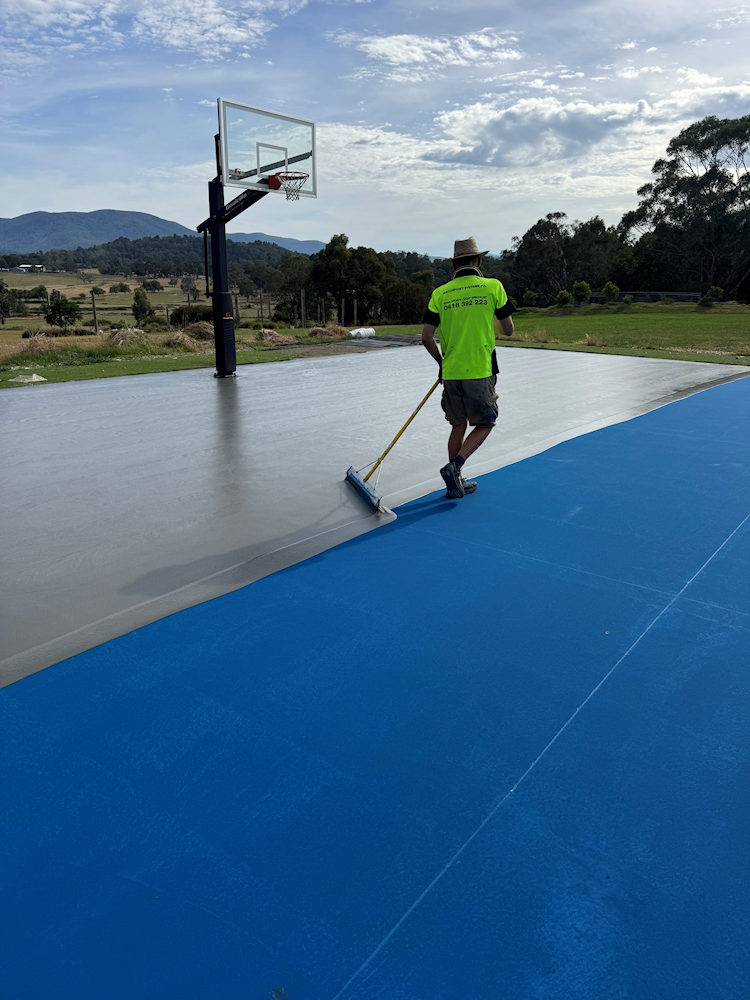
Playing speed: A hard court can be made from an acrylic surface over asphalt or concrete, offering up almost the perfect bounce for those who take the game a little more seriously.
Weather impact: The unpredictable nature of Melbourne’s weather, beautiful one second and pouring rain the next, can work well with a hard court surface. They dry fast after rain, allowing play to resume sooner. However, hard courts can be hotter during summer, sometimes too hot to play on during peak heat. Heat retention is one of the biggest drawbacks, especially for properties in full sun.
Maintenance: Hard courts require less frequent routine care than synthetic grass, but resurfacing over time is essential to keep the surface safe and smooth. Without proper care, cracking can occur in areas exposed to moisture and temperature fluctuations.
Cost: Hard courts can often sit at the higher end of the spectrum, especially when constructed to high standards with proper subbase preparation.
Need help choosing the right tennis court surface? Ultra Courts is here to answer all your questions.