
Resurfacing Your Court: When is the Right Time to Upgrade Your Melbourne Tennis Surface?
When it comes to the best way to restore performance, improve safety and extend the life of your tennis arena, resurfacing your court is the way to go.
Knowing when it’s time for resurfacing your court can help prevent unnecessary repairs down the track, as well as ensuring everyone can still have a great playing experience.
Whether it’s fading lines, the appearance of cracks or rough areas, here at Ultra Courts we know resurfacing your court becomes essential when wear and tear start affecting play-ability and safety.
Let’s find out more about the right time to upgrade your Melbourne tennis court surface.
The court details
Different tennis surfaces have different expected lifespans.
- Synthetic grass courts can last an average of 10-20 years, depending on their usage and infill condition.
- Acrylic tennis court surfaces typically last 5-10 years before a resurface is needed. With regular cleaning and line repainting, minor wear can be managed, but UV exposure and heavy use gradually reduce the usability of the surface.
- If you have a clay-based court, they need more maintenance but will last roughly 5-10 years before a full resurfacing is required.
Signs that your court needs repair or resurfacing
While age provides a general guide, visible and performance-related signs are more reliable indicators that resurfacing is needed.
- Cracks are one of the clearest warning signs, especially on hard courts. Small hairline cracks may be repairable, but widespread cracking often points to base movement or surface fatigue, making resurfacing the most effective solution. Ignoring these issues can lead to water ingress, further structural damage and increased repair costs.
- Loss of traction is another common sign your court needs attention. Players may notice the surface becoming slippery, especially after rain or during humid conditions.
- Faded colour, patchiness or uneven texture can also indicate that the surface coating has worn thin and is no longer performing as intended.
- Slow drainage after rainfall is another sign to watch out for. Water that doesn’t clear quickly can weaken the surface.
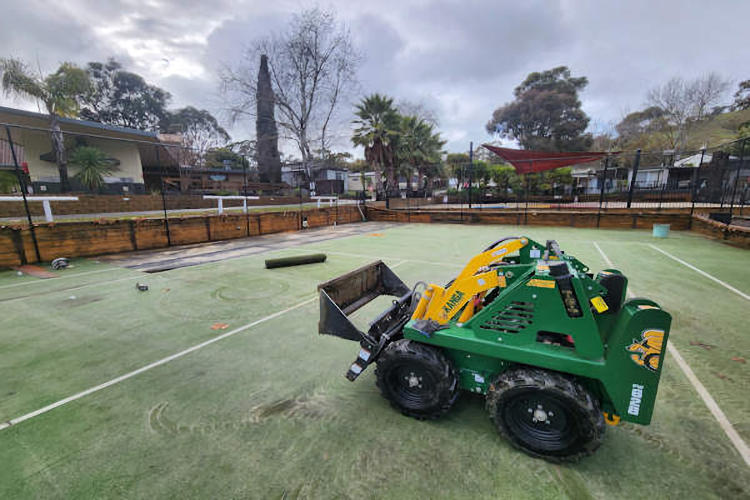
- For synthetic grass courts, flattened fibres, uneven infill or exposed base areas can be signs that the surface is nearing the end of its usable life.
- Clay courts with excess dust, poor ball bounce or instability on the surface may also require resurfacing rather than ongoing patch repairs.
If you’re unsure whether your Melbourne tennis court needs minor repairs or full resurfacing, contact Ultra Courts – we’re here to help.