
Lighting Your Court: Regulations and Best Practice for Night Play in Melbourne
Step out of the dark and get ready for a night game by lighting your court and grabbing your racket.
At Ultra Courts, we believe lighting your court is all about balancing the best illumination, thinking of your neighbours and ensuring you following all the local rules.
Ultra Courts has put together some helpful information about lighting your court, incorporating the right light levels for play, how to prevent light spill and the kinds of council limits or permits you may come across.
Having the right lighting levels
The appropriate lighting should meet the requirements of the Australian Standard for sports lighting, AS 2560.2.1. Illuminance levels are measured in lux. For a backyard tennis court in Melbourne, the recommended lighting level for recreational play is an average of 200-250 lux, while a minimum of 100 lux is required for basic, casual games. When it comes to club competition, 350 lux is the choice for higher-speed competitive play.
How to avoid light spill onto neighbours
- Place lights in a position that focuses on the court and isn’t directed towards neighbours’ yards or bedrooms.
- Lower your mounting heights where possible.
- Install LED lighting and use narrow beam optics to help with the light focus
- Wherever possible, direct light downwards to light the court. If there is no alternative to up-lighting, using shields will help keep spill light to a minimum.
- Use existing features like trees to help block the light from entering neighbouring properties.
- Only use the lights when you’re using the court, keep them switched off at all other times.
Council restrictions
Many Melbourne councils require external lighting to meet AS4282 and will treat strong sports lighting as a higher-impact activity. Local policies commonly require a lighting assessment with an application (especially for “commercial-level” or high-lux installations) and may impose operational limits such as automatic timers or cut-off hours.
For example, many councils’ public-space policies state sports lights must be turned off by 11pm, unless an event permit is granted.
Setbacks, orientation and demonstrating minimal spill are often part of the planning or permit process. If in doubt, always check your council’s lighting or public-open-space policy early in the project.
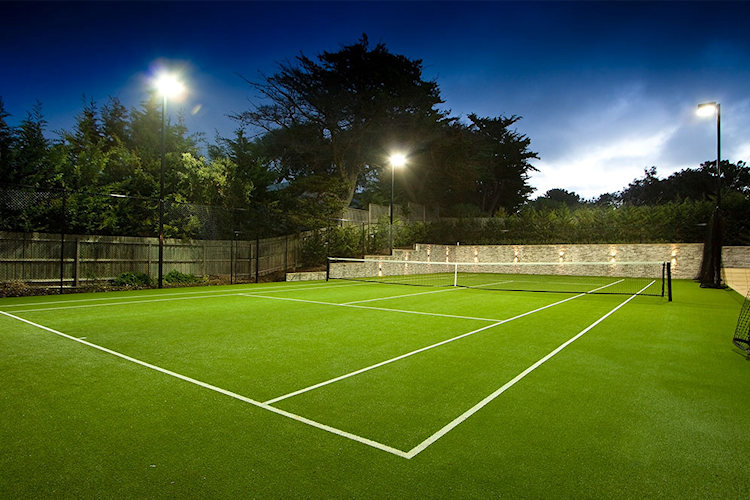
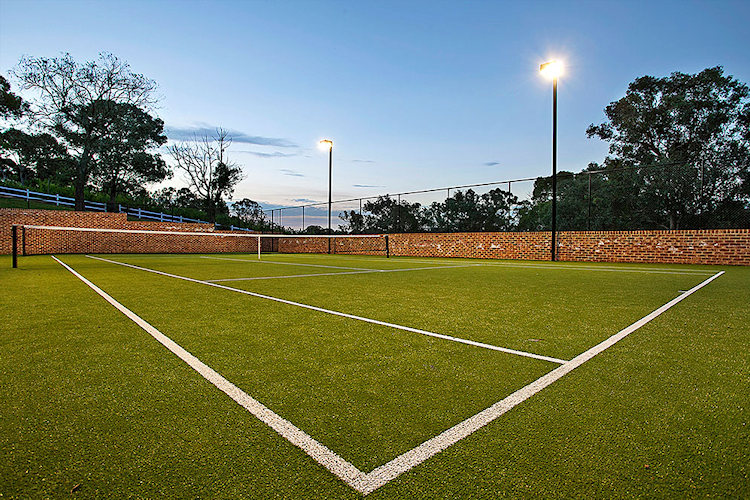
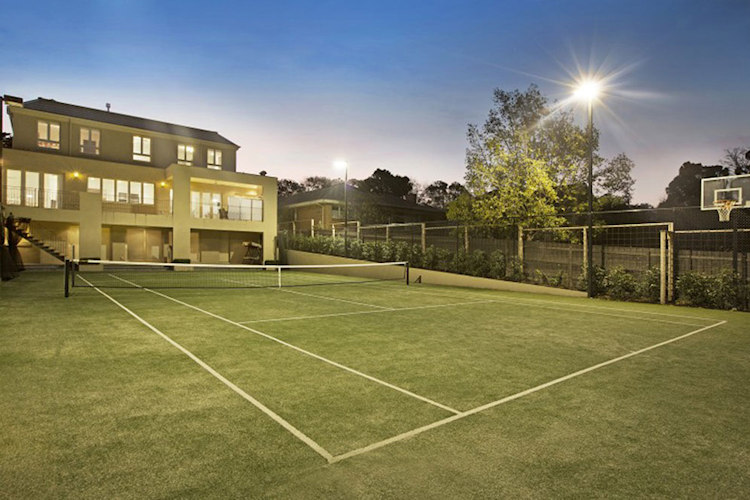
Get ready to flick the switch on for your tennis court. Ultra Courts is here to answer all your questions. Reach out to our expert team.